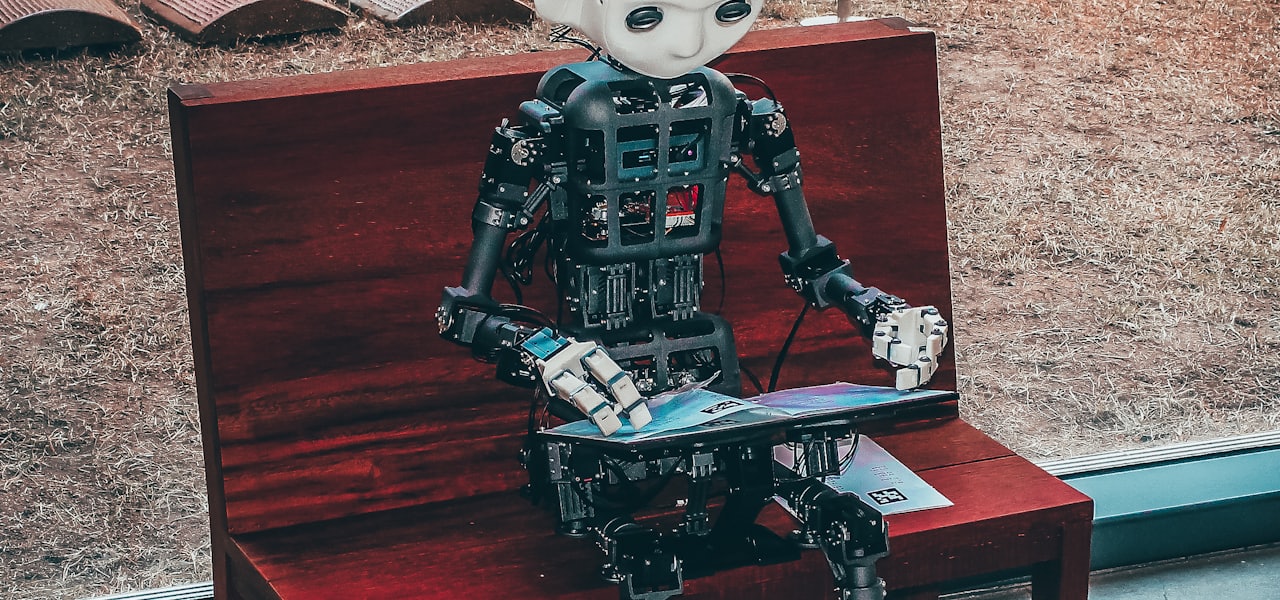
Artificial intelligence (AI) is the capability of computational systems to perform tasks typically associated with human intelligence, such as learning, reasoning, problem-solving, perception, and decision-making. It is a field of research in engineering, mathematics and computer science that develops and studies methods and software that enable machines to perceive their environment and use learning and intelligence to take actions that maximize their chances of achieving defined goals. High-profile applications of AI include advanced web search engines, chatbots, virtual assistants, autonomous vehicles, and play and analysis in strategy games (e.g., chess and Go). Since the 2020s, generative AI has become widely available to generate images, audio, and videos from text prompts. The traditional goals of AI research include learning, reasoning, knowledge representation, planning, natural language processing, and perception, as well as support for robotics. To reach these goals, AI researchers have used techniques including state space search and mathematical optimization, formal logic, artificial neural networks, and methods based on statistics, operations research, and economics. AI also draws upon psychology, linguistics, philosophy, neuroscience, and other fields. Some companies, such as OpenAI, Google DeepMind and Meta, aim to create artificial general intelligence (AGI) – AI that can complete virtually any cognitive task at least as well as a human. Artificial intelligence was founded as an academic discipline in 1956, and the field went through multiple cycles of optimism throughout its history, followed by periods of disappointment and loss of funding, known as AI winters. Funding and interest increased substantially after 2012, when graphics processing units began being used to accelerate neural networks, and deep learning outperformed previous AI techniques. This growth accelerated further after 2017 with the transformer architecture. In the 2020s, an AI boom has coincided with advances in generative AI, which allowed for the creation and modification of media. In addition to AI safety and unintended consequences and harms from the use of AI, ethical concerns, AI's long-term effects, and potential existential risks have prompted discussions of AI regulation. == Goals == The general problem of simulating (or creating) intelligence has been broken into subproblems. These consist of particular traits or capabilities that researchers expect an intelligent system to display. The traits described below have received the most attention and cover the scope of AI research. === Reasoning and problem-solving === Early researchers developed algorithms that imitated step-by-step reasoning that humans use when they solve puzzles or make logical deductions. By the late 1980s and 1990s, methods were developed for dealing with uncertain or incomplete information, employing concepts from probability and economics. Many of these algorithms are insufficient for solving large reasoning problems because they experience a "combinatorial explosion": They become exponentially slower as the problems grow. Even humans rarely use the step-by-step deduction that early AI research could model. They solve most of their problems using fast, intuitive judgments. Accurate and efficient reasoning is an unsolved problem. === Knowledge representation === Knowledge representation and knowledge engineering allow AI programs to answer questions intelligently and make deductions about real-world facts. Formal knowledge representations are used in content-based indexing and retrieval, scene interpretation, clinical decision support, knowledge discovery (mining "interesting" and actionable inferences from large databases), and other areas. A knowledge base is a body of knowledge represented in a form that can be used by a program. An ontology is the set of objects, relations, concepts, and properties used by a particular domain of knowledge. Knowledge bases need to represent things such as objects, properties, categories, and relations between objects; situations, events, states, and time; causes and effects; knowledge about knowledge (what we know about what other people know); default reasoning (things that humans assume are true until they are told differently and will remain true even when other facts are changing); and many other aspects and domains of knowledge. Among the most difficult problems in knowledge representation are the breadth of commonsense knowledge (the set of atomic facts that the average person knows is enormous); and the sub-symbolic form of most commonsense knowledge (much of what people know is not represented as "facts" or "statements" that they could express verbally). There is also the difficulty of knowledge acquisition, the problem of obtaining knowledge for AI applications. === Planning and decision-making === An "agent" is any entity (artificial or not) that perceives and takes actions in the world. A rational agent has goals or preferences and takes actions to make them happen. In automated planning, the agent has a specific goal. In automated decision-making, the agent has preferences—there are some situations it would prefer to be in, and some situations it is trying to avoid. The decision-making agent assigns a number to each situation (called the "utility") that measures how much the agent prefers it. For each possible action, it can calculate the "expected utility": the utility of all possible outcomes of the action, weighted by the probability that the outcome will occur. It can then choose the action with the maximum expected utility. In classical planning, the agent knows exactly what the effect of any action will be. In most real-world problems, however, the agent may not be certain about the situation they are in (it is "unknown" or "unobservable") and it may not know for certain what will happen after each possible action (it is not "deterministic"). It must choose an action by making a probabilistic guess and then reassess the situation to see if the action worked. Alongside thorough testing and improvement based on previous decisions, having an explanation for why the agent took certain decisions is a way to build trust, especially when the decisions have to be relied upon. In some problems, the agent's preferences may be uncertain, especially if there are other agents or humans involved. These can be learned (e.g., with inverse reinforcement learning), or the agent can seek information to improve its preferences. Information value theory can be used to weigh the value of exploratory or experimental actions. The space of possible future actions and situations is typically intractably large, so the agents must take actions and evaluate situations while being uncertain of what the outcome will be. A Markov decision process has a transition model that describes the probability that a particular action will change the state in a particular way and a reward function that supplies the utility of each state and the cost of each action. A policy associates a decision with each possible state. The policy could be calculated (e.g., by iteration), be heuristic, or it can be learned. Game theory describes the rational behavior of multiple interacting agents and is used in AI programs that make decisions that involve other agents. === Learning === Machine learning is the study of programs that can improve their performance on a given task automatically. It has been a part of AI from the beginning. There are several kinds of machine learning. Unsupervised learning analyzes a stream of data and finds patterns and makes predictions without any other guidance. Supervised learning requires labeling the training data with the expected answers, and comes in two main varieties: classification (where the program must learn to predict what category the input belongs in) and regression (where the program must deduce a numeric function based on numeric input). In reinforcement learning, the agent is rewarded for good responses and punished for bad ones. The agent learns to choose responses that are classified as "good". Transfer learning is when the knowledge gained from one problem is applied to a new problem. Deep learning is a type of machine learning that runs inputs through biologically inspired artificial neural networks for all of these types of learning. Computational learning theory can assess learners by computational complexity, by sample complexity (how much data is required), or by other notions of optimization. === Natural language processing === Natural language processing (NLP) allows programs to read, write and communicate in human languages. Specific problems include speech recognition, speech synthesis, machine translation, information extraction, information retrieval and question answering. Early work, based on Noam Chomsky's generative grammar and semantic networks, had difficulty with word-sense disambiguation unless
Automate This
Automate This: How Algorithms Came to Rule Our World is a book written by Christopher Steiner and published by Penguin Group. == Book == Steiner begins his study of algorithms on Wall Street in the 1980s but also provides examples from other industries. For example, he explains the history of Pandora Radio and the use of algorithms in music identification. He expresses concern that such use of algorithms may lead to the homogenization of music over time. Steiner also discusses the algorithms that eLoyalty (now owned by Mattersight Corporation following divestiture of the technology) was created by dissecting 2 million speech patterns and can now identify a caller's personality style and direct the caller with a compatible customer support representative. Steiner's book shares both the warning and the opportunity that algorithms bring to just about every industry in the world, and the pros and cons of the societal impact of automation (e.g. impact on employment).
Corpus language
A corpus language is a language that has no living speakers but for which numerous records produced by its native speakers survive. Examples of corpus languages are Ancient Greek, Latin, the Egyptian language, Old English, Old Norse, Elamite, and Sanskrit. Some corpus languages, such as Ancient Greek and Latin, left very large corpora and therefore can be fully reconstructed, even though some details of pronunciation may be unclear. Such languages can be used even today, as is the case with Sanskrit and Latin. Other languages have such limited corpora that some important words—e.g., some pronouns—are lacking in the corpora. Examples of these are Ugaritic and Gothic. Languages attested only by a few words, often names, and a few phrases, are called Trümmersprache (literally "rubble languages") in German linguistics. These can be reconstructed only in a very limited way, and often their genetic relationship to other languages remains unclear. Examples are Dalmatian, Etruscan, also known as Rasenna, Dadanitic, a Semitic language that may be close to classical Arabic, Lombardic, Burgundian, Vandalic, and Oscan, Umbrian, and Faliscan, all Italic languages that were related to Latin. Corpus languages are studied using the methods of corpus linguistics, but corpus linguistics can also be used (and is commonly used) for the study of the writings and other records of living languages. Not all extinct languages are corpus languages, since there are many extinct languages in which few or no writings or other records survive, as is the case in the vast majority of languages that have ever existed.
Magnetic ink character recognition
Magnetic ink character recognition code, known in short as MICR code, is a character recognition technology used mainly by the banking industry to streamline the processing and clearance of cheques and other documents. MICR encoding, called the MICR line, is at the bottom of cheques and other vouchers and typically includes the document-type indicator, bank code, bank account number, cheque number, cheque amount (usually added after a cheque is presented for payment), and a control indicator. The format for the bank code and bank account number is country-specific. The technology allows MICR readers to scan and read the information directly into a data-collection device. Unlike barcode and similar technologies, MICR characters can be read easily by humans. MICR encoded documents can be processed much faster and more accurately than conventional OCR encoded documents. == Pre-Unicode standard representation == The ISO standard ISO 2033:1983, and the corresponding Japanese Industrial Standard JIS X 9010:1984 (originally JIS C 6229–1984), define character encodings for OCR-A, OCR-B and E-13B. == International spread == There are two major MICR fonts in use: E-13B and CMC-7. There is no particular international agreement on which countries use which font. In practice, this does not create particular problems as cheques and other vouchers do not usually flow out of a particular jurisdiction. The E-13B font has been adopted as an international standard in ISO 1004-1:2013, and is the standard in Australia, Canada, the United Kingdom, the United States, as well as Central America and much of Asia, besides other countries. The CMC-7 font has been adopted as an international standard in ISO 1004-2:2013, and is widely used in Europe, including France and Italy, Mexico, and South America, including Argentina, Brazil, Chile, besides other countries. Israel is the only country that can use both fonts simultaneously, though the practice makes the system significantly less efficient. This situation is the product of the Israelis adopting CMC-7, while the Palestinians opted for E-13B. == Fonts == === E-13B === E-13B is a 14-character set, comprising the 10 decimal digits, and the following symbols: ⑆ (transit: used to delimit a bank code); ⑈ (on-us: used to delimit a customer account number); ⑇ (amount: used to delimit a transaction amount); ⑉ (dash: used to delimit parts of numbers—e.g., routing numbers or account numbers). In the check printing and banking industries the E-13B MICR line is also commonly referred to as the TOAD line. This reference comes from the 4 characters: Transit, On-us, Amount, and Dash. Compared to CMC-7, some pairs of E-13B characters (notably 2 and 5) can produce relatively similar results when magnetically scanned; however, as a fallback if magnetic reading fails, E-13B also performs well under optical character recognition. The E-13B repertoire can be represented in Unicode (see below). The official Unicode names contain misnomers. For example, the ⑈ on-us symbol is official titled "OCR Dash". Prior to Unicode, it could be encoded according to ISO 2033:1983, which encodes digits in their usual ASCII locations, transit as 0x3A, on-us as 0x3C, amount as 0x3B, and dash as 0x3D. For EBCDIC, IBM code page 1001 encodes digits in their usual EBCDIC locations, transit as 0xDB, on-us as 0xEB, amount as 0xCB, and dash as 0xFB. IBM code page 1032 extends code page 1001 by adding alternative encodings for transit at 0x5C, 0x7A and 0xC1, on-us at 0x4C, 0x61 and 0xC3, amount at 0x5B, 0x5E and 0xC2 and dash at 0x60, 0x7E and 0xC4, in addition to a zero-width space at 0x5A. These alternative representations were added for interoperability with Siemens and Océ printers. === CMC-7 === CMC-7 includes 10 numeric digits, 26 capital letters, and 5 control characters: S I (internal), S II (terminator), S III (amount), S IV (an unused character), and S V (routing). CMC-7 has a barcode format, with every character having two distinct large gaps in different places, as well as distinct patterns in between, to minimize any chance for character confusion while reading magnetically; however, these bars are too close and narrow to be reliably recognised at a typical scan resolution if falling back to optical scanning. CMC-7 can also produce superficially successful, but incorrect, scans of upside-down MICR lines. Unicode does not include support for the CMC-7 control symbols. IBM code page 1033 encodes: Digits and capitals in their usual EBCDIC locations S I (internal) as 0x5E, 0x61 or 0xCB; S II (terminator) as 0x4C, 0x5B or 0xEB; S III (amount) as 0x60, 0x7E or 0xFB; S IV as 0x50, 0x7A or 0xDB; S V (routing) as 0x5C, 0x6E or 0xBB. == MICR reader == MICR characters are printed on documents in one of the two MICR fonts, using magnetizable (commonly known as magnetic) ink or toner, usually containing iron oxide. In scanning, the document is passed through a MICR reader, which performs two functions: magnetization of the ink, and detection of the characters. The characters are read by a MICR reader head, a device similar to the playback head of a tape recorder. As each character passes over the head, it produces a unique waveform that can be easily identified by the system. MICR readers are the primary tool for cheque sorting and are used across the cheque distribution network at multiple stages. For example, a merchant will use a MICR reader to sort cheques by bank and send the sorted cheques to a clearing house for redistribution to those banks. Upon receipt, the banks perform another MICR sort to determine which customer's account is charged and to which branch the cheque should be sent on its way back to the customer. However, many banks no longer offer this last step of returning the cheque to the customer. Instead, cheques are scanned and stored digitally. Sorting of cheques is done as per the geographical coverage of banks in a nation. == Unicode == OCR and MICR characters have been included in the Unicode Standard since at least version 1.1 (June 1993). Since the Unicode Character Database only tracks characters starting with version 1.1, they may also have been present in Unicode 1.0 or 1.0.1. The Unicode block that includes OCR and MICR characters is called Optical Character Recognition and covers U+2440–U+245F. Of the characters in this block, four are from the MICR E-13B font: U+2446 ⑆ OCR BRANCH BANK IDENTIFICATION U+2447 ⑇ OCR AMOUNT OF CHECK U+2448 ⑈ OCR DASH (corrected alias MICR ON US SYMBOL) U+2449 ⑉ OCR CUSTOMER ACCOUNT NUMBER (corrected alias MICR DASH SYMBOL) The names of the latter two characters were inadvertently switched when they were named in ISO/IEC 10646:1993, and they have been assigned accurate names as formal aliases. Per the Unicode Stability Policy, the existing names remain, allowing their use as stable identifiers. Additionally, all four characters have informative (non-formal) aliases in the Unicode charts: "transit", "amount", "on-us", and "dash" respectively. Prior to Unicode, these symbols had been encoded by the ISO-IR-98 encoding defined by ISO 2033:1983, in which they were simply named SYMBOL ONE through SYMBOL FOUR. They were encoded immediately following the digits, which were encoded at their ASCII locations. Although ISO 2033 also specifies encoding for OCR-A and OCR-B, its encoding for E-13B is known simply as ISO_2033-1983 by the IANA. == History == Before the mid-1940s, cheques were processed manually using the Sort-A-Matic or Top Tab Key method. The processing and cheque clearing was very time-consuming and was a significant cost in cheque clearance and bank operations. As the number of cheques increased, ways were sought for automating the process. Standards were developed to ensure uniformity in financial institutions. By the mid-1950s, the Stanford Research Institute and General Electric Computer Laboratory had developed the first automated system to process cheques using MICR. The same team also developed the E-13B MICR font. "E" refers to the font being the fifth considered, and "B" to the fact that it was the second version. The "13" refers to the 0.013-inch character grid. The trial of MICR E-13B font was shown to the American Bankers Association (ABA) in July 1956, which adopted it in 1958 as the MICR standard for negotiable documents in the United States. ABA adopted MICR as its standard because machines could read MICR accurately, and MICR could be printed using existing technology. In addition, MICR remained machine readable, even through overstamping, marking, mutilation and more. The first cheques using MICR were printed by the end of 1959. Although compliance with MICR standards was voluntary in the United States, it had been almost universally adopted in the United States by 1963. In 1963, ANSI adopted the ABA's E-13B font as the American standard for MICR printing, and E-13B was also standardized as ISO 1004:1995. Other countries set their own standards, though the MICR readers and m
Probabilistic context-free grammar
In theoretical linguistics and computational linguistics, probabilistic context free grammars (PCFGs) extend context-free grammars, similar to how hidden Markov models extend regular grammars. Each production is assigned a probability. The probability of a derivation (parse) is the product of the probabilities of the productions used in that derivation. These probabilities can be viewed as parameters of the model, and for large problems it is convenient to learn these parameters via machine learning. A probabilistic grammar's validity is constrained by context of its training dataset. PCFGs originated from grammar theory, and have application in areas as diverse as natural language processing to the study the structure of RNA molecules and design of programming languages. Designing efficient PCFGs has to weigh factors of scalability and generality. Issues such as grammar ambiguity must be resolved. The grammar design affects results accuracy. Grammar parsing algorithms have various time and memory requirements. == Definitions == Derivation: The process of recursive generation of strings from a grammar. Parsing: Finding a valid derivation using an automaton. Parse Tree: The alignment of the grammar to a sequence. An example of a parser for PCFG grammars is the pushdown automaton. The algorithm parses grammar nonterminals from left to right in a stack-like manner. This brute-force approach is not very efficient. In RNA secondary structure prediction variants of the Cocke–Younger–Kasami (CYK) algorithm provide more efficient alternatives to grammar parsing than pushdown automata. Another example of a PCFG parser is the Stanford Statistical Parser which has been trained using Treebank. == Formal definition == Similar to a CFG, a probabilistic context-free grammar G can be defined by a quintuple: G = ( M , T , R , S , P ) {\displaystyle G=(M,T,R,S,P)} where M is the set of non-terminal symbols T is the set of terminal symbols R is the set of production rules S is the start symbol P is the set of probabilities on production rules == Relation with hidden Markov models == PCFGs models extend context-free grammars the same way as hidden Markov models extend regular grammars. The Inside-Outside algorithm is an analogue of the Forward-Backward algorithm. It computes the total probability of all derivations that are consistent with a given sequence, based on some PCFG. This is equivalent to the probability of the PCFG generating the sequence, and is intuitively a measure of how consistent the sequence is with the given grammar. The Inside-Outside algorithm is used in model parametrization to estimate prior frequencies observed from training sequences in the case of RNAs. Dynamic programming variants of the CYK algorithm find the Viterbi parse of a RNA sequence for a PCFG model. This parse is the most likely derivation of the sequence by the given PCFG. == Grammar construction == Context-free grammars are represented as a set of rules inspired from attempts to model natural languages. The rules are absolute and have a typical syntax representation known as Backus–Naur form. The production rules consist of terminal { a , b } {\displaystyle \left\{a,b\right\}} and non-terminal S symbols and a blank ϵ {\displaystyle \epsilon } may also be used as an end point. In the production rules of CFG and PCFG the left side has only one nonterminal whereas the right side can be any string of terminal or nonterminals. In PCFG nulls are excluded. An example of a grammar: S → a S , S → b S , S → ϵ {\displaystyle S\to aS,S\to bS,S\to \epsilon } This grammar can be shortened using the '|' ('or') character into: S → a S | b S | ϵ {\displaystyle S\to aS|bS|\epsilon } Terminals in a grammar are words and through the grammar rules a non-terminal symbol is transformed into a string of either terminals and/or non-terminals. The above grammar is read as "beginning from a non-terminal S the emission can generate either a or b or ϵ {\displaystyle \epsilon } ". Its derivation is: S ⇒ a S ⇒ a b S ⇒ a b b S ⇒ a b b {\displaystyle S\Rightarrow aS\Rightarrow abS\Rightarrow abbS\Rightarrow abb} Ambiguous grammar may result in ambiguous parsing if applied on homographs since the same word sequence can have more than one interpretation. Pun sentences such as the newspaper headline "Iraqi Head Seeks Arms" are an example of ambiguous parses. One strategy of dealing with ambiguous parses (originating with grammarians as early as Pāṇini) is to add yet more rules, or prioritize them so that one rule takes precedence over others. This, however, has the drawback of proliferating the rules, often to the point where they become difficult to manage. Another difficulty is overgeneration, where unlicensed structures are also generated. Probabilistic grammars circumvent these problems by ranking various productions on frequency weights, resulting in a "most likely" (winner-take-all) interpretation. As usage patterns are altered in diachronic shifts, these probabilistic rules can be re-learned, thus updating the grammar. Assigning probability to production rules makes a PCFG. These probabilities are informed by observing distributions on a training set of similar composition to the language to be modeled. On most samples of broad language, probabilistic grammars where probabilities are estimated from data typically outperform hand-crafted grammars. CFGs when contrasted with PCFGs are not applicable to RNA structure prediction because while they incorporate sequence-structure relationship they lack the scoring metrics that reveal a sequence structural potential == Weighted context-free grammar == A weighted context-free grammar (WCFG) is a more general category of context-free grammar, where each production has a numeric weight associated with it. The weight of a specific parse tree in a WCFG is the product (or sum ) of all rule weights in the tree. Each rule weight is included as often as the rule is used in the tree. A special case of WCFGs are PCFGs, where the weights are (logarithms of ) probabilities. An extended version of the CYK algorithm can be used to find the "lightest" (least-weight) derivation of a string given some WCFG. When the tree weight is the product of the rule weights, WCFGs and PCFGs can express the same set of probability distributions. == Applications == === RNA structure prediction === Since the 1990s, PCFG has been applied to model RNA structures. Energy minimization and PCFG provide ways of predicting RNA secondary structure with comparable performance. However structure prediction by PCFGs is scored probabilistically rather than by minimum free energy calculation. PCFG model parameters are directly derived from frequencies of different features observed in databases of RNA structures rather than by experimental determination as is the case with energy minimization methods. The types of various structure that can be modeled by a PCFG include long range interactions, pairwise structure and other nested structures. However, pseudoknots can not be modeled. PCFGs extend CFG by assigning probabilities to each production rule. A maximum probability parse tree from the grammar implies a maximum probability structure. Since RNAs preserve their structures over their primary sequence, RNA structure prediction can be guided by combining evolutionary information from comparative sequence analysis with biophysical knowledge about a structure plausibility based on such probabilities. Also search results for structural homologs using PCFG rules are scored according to PCFG derivations probabilities. Therefore, building grammar to model the behavior of base-pairs and single-stranded regions starts with exploring features of structural multiple sequence alignment of related RNAs. S → a S a | b S b | a a | b b {\displaystyle S\to aSa|bSb|aa|bb} The above grammar generates a string in an outside-in fashion, that is the basepair on the furthest extremes of the terminal is derived first. So a string such as a a b a a b a a {\displaystyle aabaabaa} is derived by first generating the distal a's on both sides before moving inwards: S ⇒ a S a ⇒ a a S a a ⇒ a a b S b a a ⇒ a a b a a b a a {\displaystyle S\Rightarrow aSa\Rightarrow aaSaa\Rightarrow aabSbaa\Rightarrow aabaabaa} A PCFG model extendibility allows constraining structure prediction by incorporating expectations about different features of an RNA . Such expectation may reflect for example the propensity for assuming a certain structure by an RNA. However incorporation of too much information may increase PCFG space and memory complexity and it is desirable that a PCFG-based model be as simple as possible. Every possible string x a grammar generates is assigned a probability weight P ( x | θ ) {\displaystyle P(x|\theta )} given the PCFG model θ {\displaystyle \theta } . It follows that the sum of all probabilities to all possible grammar productions is ∑ x P ( x | θ ) = 1 {\displaystyle \sum _{\text{x}}P(x|\theta )=1} . The scores
24SevenOffice
24SevenOffice is a Norwegian software company headquartered in Oslo, Norway, with offices in Stockholm, Sweden and London, United Kingdom. Founded in 1997, the company specializes in web-based (SaaS) ERP and CRM systems. == Company history == 24SevenOffice was founded in 1997 in Porsgrunn, Norway, as IKT Interactive AS and marketed as kontorplassen.no. The name "24SevenOffice" was introduced for the company's London branch when the company entered the British market in 2003. The company changed its name to 24SevenOffice in February 2005. Originally based in Skien, the company later moved to Oslo Innovation Center, then to Tjuvholmen in the waterfront Fjord City of Oslo, and now the headquarters are located in Inkognitogaten 33, Solli plass, Oslo. The idea for the company's product was developed in 1996, and 24SevenOffice was an early innovator in the Scandinavian market in web-based enterprise resource planning solutions (ERP). A British office was established at Surrey Business Park in May 2003, with the company launching its web-based (SaaS) utility computing system to the UK SME market in 2004. An office in Chennai, India, was established in 2005, and 24SevenOffice entered the Swedish market when they acquired the leading competitor and ERP-provider Start & Run in a cash deal. In August 2005, the company had an initial public offering that raised NOK 15 million, and the company entered The Norwegian Over the Counter Market list as of 5 October 2005 (the ticker was 24SO), reaching a market value of NOK 175 million, with 5000 customers in Norway. In 2006, the company signed a deal to sponsor rally driver Petter Solberg, at the time the largest private sponsorship in Norwegian sport. Instead of receiving NOK 5 million in cash, Solberg received a 2.9 per cent ownership in the company. The company entered the German-speaking market in April 2006 when an office in Frankfurt am Main was opened. In late August/early September, they established an office with ten sales agents plus a general manager in Stockholm for the Swedish market. 24SevenOffice initiated strategic cooperation with Active 24 in early 2006 to develop a common platform. During the summer, Active 24 was bought by 24SevenOffice's ERP/CRM competitor Mamut (company), and 24SevenOffice terminated the contract with Active 24 in October demanding NOK 200 million in compensation for lost revenue. After a breakdown of settlement negotiations in the Forliksråd in January 2007, 24SevenOffice filed a case against Active 24 for breach of agreement in the Oslo District Court in March. 24SevenOffice lost on all counts in the District Court in December 2007. In January 2008, 24SevenOffice appealed the case to the Borgarting Court of Appeal, reducing the cause of action from NOK 250 to 30 million. 24SevenOffice lost on all counts in the Court of Appeal in December 2008, and was ordered to cover the costs incurred by Active 24 in connection with the dispute totaling NOK 6.91 million. 24SevenOffice appealed the case to the Supreme Court of Norway, but the Supreme Court Appeals Committee in March 2008 unanimously rejected the appeal from 24SevenOffice over the Borgarting Appeal Court's unanimous judgment of December 2008. On a counterclaim from Active 24 and Mamut against 24SevenOffice, the Oslo District Court in May 2010 found, that 24SevenOffice should pay Active 24 NOK 12 million in compensation for wrongfully having terminated the agreement, and a further NOK 360.000 of the opponent's legal costs. 24SevenOffice disagreed with the court ruling, and appealed once again. The Borgarting Court of Appeal in November 2011, ruled to reduce the amount of damages to NOK 4.4 million plus NOK 900.000 in penal interest. With several scrip issues, 24SevenOffice raised 25 million NOK (about $4 million at the time) between October 2005 and July 2006. They entered into a strategic partnership with Bluegarden, who for 30 years had delivered digital services for payroll, human resource planning, recruitment and training, in March 2006, and they made a large-scale agreement in April 2006, with US telecommunications software company Webex, a competitor to Norwegian Tandberg videoconferencing equipment manufacturer. In September 2006, 24SevenOffice signed an agreement with Fokus Bank to provide their customers with extended functionality in Internet banking. 24SevenOffice had by 2007 reportedly 9000 customers, joined the OpenAjax Alliance, and entered into a strategic partnership with Dun & Bradstreet in May 2007, but despite getting listed on Oslo Axess on 22 June (ticker: TFSO), reaching a market capitalization of NOK 120 million, the company was still losing money. The company ended 2007 with a revenue of NOK 21.7 million. In 2008, 24SevenOffice bought 50% of the stocks in telecommunication company Oyatel, partnered with Nets Group to facilitate invoicing for businesses, and telecommunications company Telipol chose 24SevenOffice's second-generation Internet platform for its 8,000 users. They announced an increase in revenues in Q2 to 11.1 million, up from 4.7 million in the same period the year before. 24SevenOffice had a turnover of NOK 37 million in the first half of 2009, a doubling compared to the same period the previous year, and presented its first positive EBITDA in Q2. The Norwegian Association of Auditors signed an agreement with 24SevenOffice in 2011, whereby they only recommend 24SevenOffice as a system for their members to use. On 27 June 2013, the shareholders of 24SevenOffice took off from the stock exchange and privatized the company. In recent years, the company has invested heavily in finance and accounting – and got leading auditing companies such as PwC and KPMG on the customer list. == Products == 24SevenOffice is a web-based (SaaS) ERP system. It includes modules for CRM, accounting, invoicing, e-mail, file/document management and project management. == Awards == 24SevenOffice won the Seal of Excellence in Multimedia Award at the 2004 CeBIT, became Norwegian Gazelle Company of the year 2004, chosen by Dagens Næringsliv and Dun & Bradstreet, won Product of the Year in the Norwegian finance magazine Kapital, and the IKT Grenland Innovation Award in 2008.
Unsupervised learning
Unsupervised learning is a framework in machine learning where, in contrast to supervised learning, algorithms learn patterns exclusively from unlabeled data. Other frameworks in the spectrum of supervisions include weak- or semi-supervision, where a small portion of the data is tagged, and self-supervision. Some researchers consider self-supervised learning a form of unsupervised learning. Conceptually, unsupervised learning divides into the aspects of data, training, algorithm, and downstream applications. Typically, the dataset is harvested cheaply "in the wild", such as massive text corpus obtained by web crawling, with only minor filtering (such as Common Crawl). This compares favorably to supervised learning, where the dataset (such as the ImageNet1000) is typically constructed manually, which is much more expensive. There are algorithms designed specifically for unsupervised learning, such as clustering algorithms like k-means, dimensionality reduction techniques like principal component analysis (PCA), Boltzmann machine learning, and autoencoders. After the rise of deep learning, most large-scale unsupervised learning has been done by training general-purpose neural network architectures by gradient descent, adapted to performing unsupervised learning by designing an appropriate training procedure. Sometimes a trained model can be used as-is, but more often they are modified for downstream applications. For example, the generative pretraining method trains a model to generate a textual dataset, before finetuning it for other applications, such as text classification. As another example, autoencoders are trained to produce good features, which can then be used as a module for other models, such as in a latent diffusion model. == Tasks == Tasks are often categorized as discriminative (recognition) or generative (imagination). Often but not always, discriminative tasks use supervised methods and generative tasks use unsupervised (see Venn diagram); however, the separation is very hazy. For example, object recognition favors supervised learning but unsupervised learning can also cluster objects into groups. Furthermore, as progress marches onward, some tasks employ both methods, and some tasks swing from one to another. For example, image recognition started off as heavily supervised, but became hybrid by employing unsupervised pre-training, and then moved towards supervision again with the advent of dropout, ReLU, and adaptive learning rates. A typical generative task is as follows. At each step, a datapoint is sampled from the dataset, and part of the data is removed, and the model must infer the removed part. This is particularly clear for the denoising autoencoders and BERT. == Neural network architectures == === Training === During the learning phase, an unsupervised network tries to mimic the data it is given and uses the error in its mimicked output to correct itself (i.e. correct its weights and biases). Sometimes the error is expressed as a low probability that the erroneous output occurs, or it might be expressed as an unstable high energy state in the network. In contrast to supervised methods' dominant use of backpropagation, unsupervised learning also employs other methods including: Hopfield learning rule, Boltzmann learning rule, Contrastive Divergence, Wake Sleep, Variational Inference, Maximum Likelihood, Maximum A Posteriori, Gibbs Sampling, and backpropagating reconstruction errors or hidden state reparameterizations. See the table below for more details. === Energy === An energy function is a macroscopic measure of a network's activation state. In Boltzmann machines, it plays the role of the Cost function. This analogy with physics is inspired by Ludwig Boltzmann's analysis of a gas' macroscopic energy from the microscopic probabilities of particle motion p ∝ e − E / k T {\displaystyle p\propto e^{-E/kT}} , where k is the Boltzmann constant and T is temperature. In the RBM network the relation is p = e − E / Z {\displaystyle p=e^{-E}/Z} , where p {\displaystyle p} and E {\displaystyle E} vary over every possible activation pattern and Z = ∑ All Patterns e − E ( pattern ) {\displaystyle \textstyle {Z=\sum _{\scriptscriptstyle {\text{All Patterns}}}e^{-E({\text{pattern}})}}} . To be more precise, p ( a ) = e − E ( a ) / Z {\displaystyle p(a)=e^{-E(a)}/Z} , where a {\displaystyle a} is an activation pattern of all neurons (visible and hidden). Hence, some early neural networks bear the name Boltzmann Machine. Paul Smolensky calls − E {\displaystyle -E\,} the Harmony. A network seeks low energy which is high Harmony. === Networks === This table shows connection diagrams of various unsupervised networks, the details of which will be given in the section Comparison of Networks. Circles are neurons and edges between them are connection weights. As network design changes, features are added on to enable new capabilities or removed to make learning faster. For instance, neurons change between deterministic (Hopfield) and stochastic (Boltzmann) to allow robust output, weights are removed within a layer (RBM) to hasten learning, or connections are allowed to become asymmetric (Helmholtz). Of the networks bearing people's names, only Hopfield worked directly with neural networks. Boltzmann and Helmholtz came before artificial neural networks, but their work in physics and physiology inspired the analytical methods that were used. === History === === Specific Networks === Here, we highlight some characteristics of select networks. The details of each are given in the comparison table below. Hopfield Network Ferromagnetism inspired Hopfield networks. A neuron corresponds to an iron domain with binary magnetic moments Up and Down, and neural connections correspond to the domain's influence on each other. Symmetric connections enable a global energy formulation. During inference the network updates each state using the standard activation step function. Symmetric weights and the right energy functions guarantees convergence to a stable activation pattern. Asymmetric weights are difficult to analyze. Hopfield nets are used as Content Addressable Memories (CAM). Boltzmann Machine These are stochastic Hopfield nets. Their state value is sampled from this pdf as follows: suppose a binary neuron fires with the Bernoulli probability p(1) = 1/3 and rests with p(0) = 2/3. One samples from it by taking a uniformly distributed random number y, and plugging it into the inverted cumulative distribution function, which in this case is the step function thresholded at 2/3. The inverse function = { 0 if x <= 2/3, 1 if x > 2/3 }. Sigmoid Belief Net Introduced by Radford Neal in 1992, this network applies ideas from probabilistic graphical models to neural networks. A key difference is that nodes in graphical models have pre-assigned meanings, whereas Belief Net neurons' features are determined after training. The network is a sparsely connected directed acyclic graph composed of binary stochastic neurons. The learning rule comes from Maximum Likelihood on p(X): Δwij ∝ {\displaystyle \propto } sj (si - pi), where pi = 1 / ( 1 + eweighted inputs into neuron i ). sj's are activations from an unbiased sample of the posterior distribution and this is problematic due to the Explaining Away problem raised by Judea Perl. Variational Bayesian methods uses a surrogate posterior and blatantly disregard this complexity. Deep Belief Network Introduced by Hinton, this network is a hybrid of RBM and Sigmoid Belief Network. The top 2 layers is an RBM and the second layer downwards form a sigmoid belief network. One trains it by the stacked RBM method and then throw away the recognition weights below the top RBM. As of 2009, 3-4 layers seems to be the optimal depth. Helmholtz machine These are early inspirations for the Variational Auto Encoders. Its 2 networks combined into one—forward weights operates recognition and backward weights implements imagination. It is perhaps the first network to do both. Helmholtz did not work in machine learning but he inspired the view of "statistical inference engine whose function is to infer probable causes of sensory input". the stochastic binary neuron outputs a probability that its state is 0 or 1. The data input is normally not considered a layer, but in the Helmholtz machine generation mode, the data layer receives input from the middle layer and has separate weights for this purpose, so it is considered a layer. Hence this network has 3 layers. Variational autoencoder These are inspired by Helmholtz machines and combines probability network with neural networks. An Autoencoder is a 3-layer CAM network, where the middle layer is supposed to be some internal representation of input patterns. The encoder neural network is a probability distribution qφ(z given x) and the decoder network is pθ(x given z). The weights are named phi & theta rather than W and V as in Helmholtz—a cosmetic difference. These 2 networks h